
Book your private session
Get genuine guidance from Pandit Basant Vyas Ji
Book NowApp Available on:




BLOG
Why Devshayani Ekadashi is Special?
Why Devshayani Ekadashi is Special?
Posted on 14 July 2025 | by Astro Star Talk
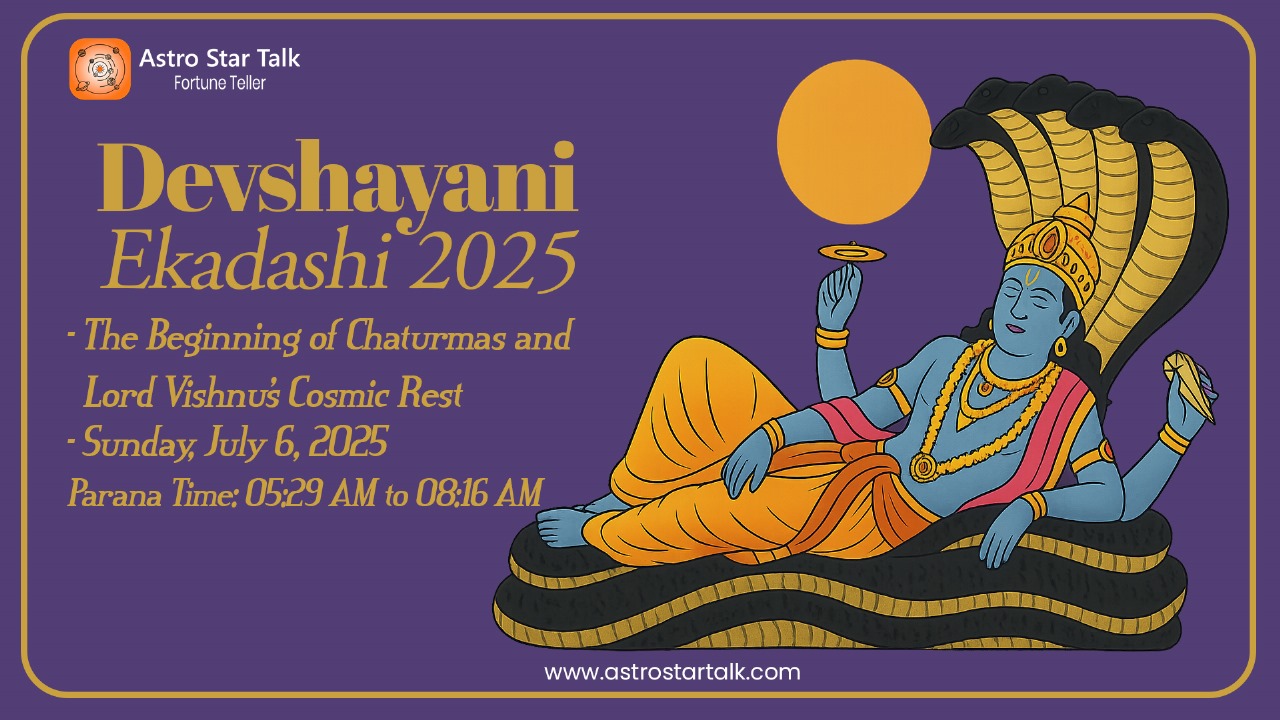
Devshayani Ekadashi 2025: The Beginning of Chaturmas and Lord Vishnu's Cosmic Rest
Introduction
Devshayani Ekadashi, also known as Padma Ekadashi, Ashadi Ekadashi, and Hari Shayani Ekadashi, is one of the most significant Ekadashis dedicated to Lord Vishnu. Falling on the Shukla Paksha Ekadashi of Ashadha month, this day marks the beginning of Chaturmas, the holy four-month period in the Hindu calendar when Lord Vishnu goes into Yoga Nidra (divine sleep).
- Date, Tithi, and Parana Timing in 2025
- Ekadashi Date: Sunday, July 6, 2025
- Ekadashi Tithi Begins: 06:58 PM on July 5, 2025 (Saturday)
- Ekadashi Tithi Ends: 09:14 PM on July 6, 2025 (Sunday)
Parana (Breaking the Fast)
- Date: Monday, July 7, 2025
- Parana Time: 05:29 AM to 08:16 AM
- Dwadashi Ends: 11:10 PM on July 7, 2025
Important Note:
Parana should be done after Hari Vasara ends and within Dwadashi Tithi. Breaking the fast late or not performing Parana within Dwadashi is considered an offence as per Dharma Shastras.
Spiritual and Astrological Significance
On Devshayani Ekadashi, it is believed that Lord Vishnu enters Yoga Nidra (cosmic sleep) on the Shesha Naag in Ksheer Sagar (Ocean of Milk). He remains asleep for four months and awakens on Prabodhini Ekadashi, marking the end of Chaturmas.
- Chaturmas, which begins from Devshayani Ekadashi, is considered a highly sacred time for penance, self-discipline, and devotion. During this period:
- Marriages and auspicious ceremonies are avoided, focusing life towards spiritual pursuits, sadhana, reading scriptures, and self-purification.
- The Devas are believed to rest, and all rituals performed during these months hold manifold benefits for the devotee’s spiritual progress.
Rituals and Observances
- Fasting:
Devotees observe a strict fast, avoiding grains, rice, pulses, and certain vegetables. Some follow a Nirjala fast (without water), while others consume fruits, milk, and water depending on their health. - Puja and Worship:
- Wake up before Brahma Muhurta, take a holy bath, and perform Vishnu Puja with Tulsi leaves, flowers, incense, and lamps.
- Recite Vishnu Sahasranama, Gita chapters, or Ekadashi Mahatmya Katha during the day to seek blessings.
- Night Vigil:
Many devotees spend the night singing bhajans and kirtans, staying awake in Lord Vishnu’s remembrance.
Parana Rules (Breaking the Fast)
- Parana means breaking the Ekadashi fast, and it is done after sunrise on Dwadashi.
- Hari Vasara, the first one-fourth duration of Dwadashi Tithi, is not suitable for Parana. Devotees must wait for it to end.
- The most preferred time is Pratahkal (early morning). If this is not possible, Parana can be done after Madhyahna, avoiding Madhyahna itself.
Fasting on Two Consecutive Days
Sometimes, Ekadashi fasting is suggested for two consecutive days:
- First Day: For Smartha householders (those with family responsibilities).
- Second Day: For Vaishnavas, Sanyasis, widows, and those seeking Moksha (liberation), as it coincides with Vaishnava Ekadashi.
- Both Days: Observed by staunch devotees who desire the deep affection and grace of Lord Vishnu.
Legends Associated with Devshayani Ekadashi
According to Padma Purana, observing Devshayani Ekadashi with complete devotion washes away sins and grants freedom from the cycle of birth and death. It is believed that one who observes this Ekadashi attains Vaikuntha, the abode of Lord Vishnu, after their earthly life.
Final Thought
Devshayani Ekadashi is not just an Ekadashi; it is a spiritual doorway to enter the holy phase of Chaturmas. It reminds devotees to slow down, focus inward, strengthen their sadhana, and seek the blessings of Lord Vishnu, the sustainer of the universe, who preserves dharma and uplifts the devotees.
Stay connected with Astro Star Talk for detailed Ekadashi timings, Vrat Kathas, and daily Panchang insights to guide your spiritual journey with authentic Vedic wisdom.